
Planning Essentials

passengers at cruise embarkation terminal
1

Booking Timelines

The optimal time to book a cruise depends on the itinerary, the cruise line, and the cabin category you are considering. Popular sailings during peak Malaysian travel periods — school holidays, Chinese New Year, and the year-end season — can see preferred cabin grades sell out months in advance. Engaging with the planning process early does not commit you to an immediate booking decision, but it gives you a more complete picture of what is available and at what cost before the best options disappear.

2

Embarkation Day

Embarkation day is one of the more logistically demanding parts of a cruise, and it rewards preparation. Arriving at the terminal within your assigned check-in window avoids the queues that build when passengers arrive simultaneously. Carry-on luggage should include anything you need for the first evening, as checked bags can take several hours to reach your cabin after the ship departs. Reviewing the embarkation process for your specific terminal before travel day reduces the friction of an unfamiliar environment.

Currency and Payments

Most modern cruise ships operate on a cashless system where all onboard purchases are charged to a linked account and settled at the end of the voyage. Cash in local currency is still useful in port, particularly in smaller destinations where card acceptance is limited and currency exchange facilities may not be available until you disembark. Malaysian ringgit can be exchanged before departure or withdrawn at ATMs in major port cities, though exchange rates and availability vary considerably by destination.

Staying Connected

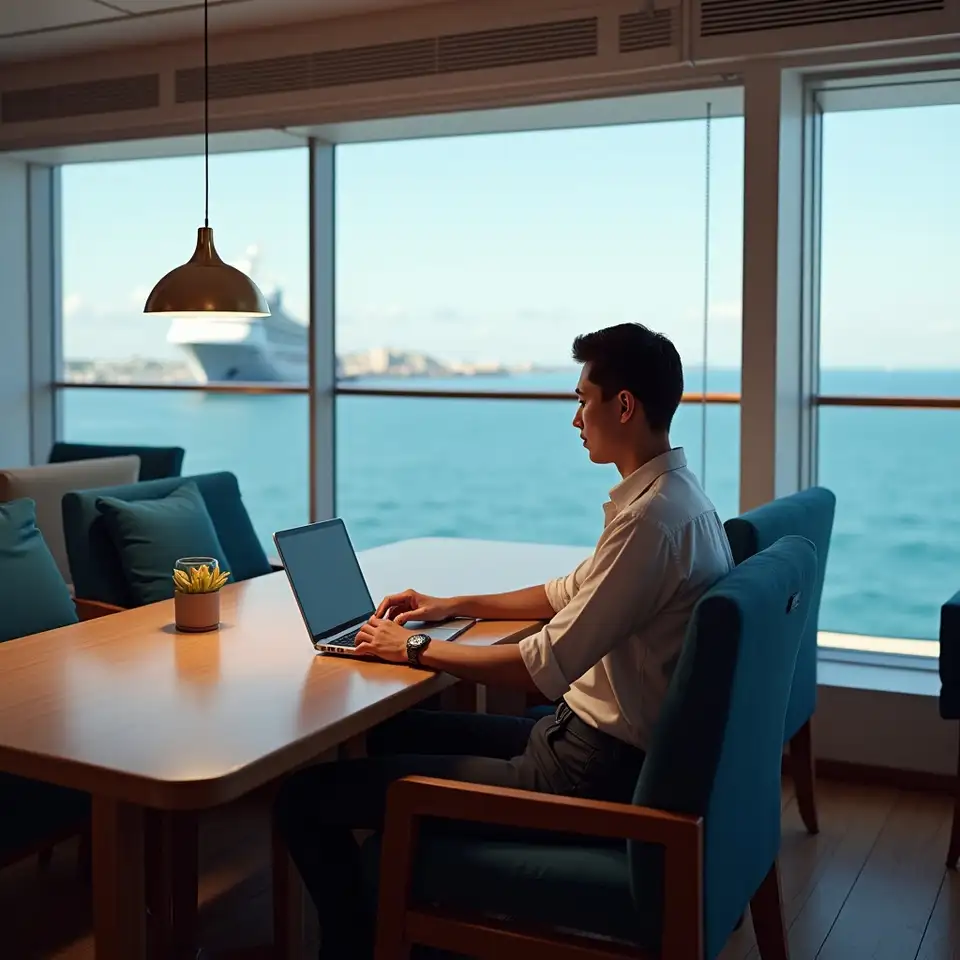
Wi-Fi at sea has improved considerably in recent years, but it remains more expensive and less reliable than land-based connections. Most cruise lines offer tiered connectivity packages that vary in speed and daily data allowance, and the value of these packages depends on how much you intend to use them. Travellers who plan to work remotely during a sailing should review the specific package terms carefully rather than assuming the ship's connectivity will match their usual working environment.

The Onboard Experience Explained

Life on a cruise ship follows a rhythm that most first-time travellers do not fully anticipate until they are several days into the voyage. The morning typically begins with the ship either arriving at a port or continuing at sea, and the day's schedule adjusts accordingly. Port days are defined by the timing of disembarkation, the structure of any planned excursions, and the all-aboard deadline that brings the day ashore to a close. Sea days have no such external structure, and how you spend them depends entirely on your own preferences and what the ship makes available. A large resort vessel will offer a full programme of activities, fitness classes, poolside entertainment, and daytime performances. A smaller premium ship may offer enrichment lectures, quiet reading spaces, and a more contemplative pace that suits travellers who find constant programming exhausting rather than appealing. Meals punctuate the day in a way that feels different to a land-based holiday. The main dining room operates on either a fixed or flexible seating model depending on the cruise line, and specialty restaurants require reservations that are worth securing early in the voyage — or in some cases, before you even board. The buffet provides a casual alternative at most hours, and many ships offer room service as a standard inclusion. Evenings on board tend to follow a recognisable pattern of dinner, entertainment, and whatever the ship's bars and lounges offer after dark. The entertainment quality varies enormously between cruise lines, and it is one of the less prominently discussed factors in cruise selection despite its genuine impact on the overall enjoyment of a longer sailing. Understanding what to expect in the evenings — and whether it aligns with how you prefer to spend that time — is part of the planning conversation that helps you choose the right ship.

Cruise Tips

Arrive Early

Travelling to your embarkation port the day before your cruise departs is one of the simplest risk-reduction strategies available to a cruise passenger. Flight delays, traffic, and unexpected logistical issues on the morning of embarkation can cause genuine stress when the ship has a fixed departure time that it will not change for individual latecomers. A single night in a port city hotel is a modest cost compared to the disruption of missing your sailing entirely.

Research Your Ports

Every port on a cruise itinerary has its own character, and the best way to spend your time ashore is rarely the same from one destination to the next. Some ports are best experienced through a structured excursion that takes you to sites outside the immediate docking area. Others reward independent exploration of a compact and walkable historic centre. Researching each port before departure — even briefly — helps you make better decisions about where to invest your time and energy during a busy itinerary.


passenger relaxing on deck during sea day
cruise passengers exploring historic port town

Manage Expectations

First-time cruise travellers sometimes arrive on board with expectations shaped more by promotional imagery than by what a voyage genuinely involves. The ship will be large and occasionally busy. Shore time in port is finite. Weather affects itineraries in ways that no cruise line can fully control. Approaching the voyage with realistic expectations about these realities — and focusing on what the experience does well rather than measuring it against an idealised version — is the most reliable path to genuine enjoyment.

Plan Sea Days

Sea days are the aspect of cruise travel that first-timers are most likely to underplan and experienced cruisers most likely to value. A day at sea with no port commitments is an opportunity that becomes increasingly rare in ordinary life — time with no particular agenda, in a setting that changes constantly outside the window. Whether you spend it reading, exploring the ship's facilities, attending an enrichment session, or simply watching the ocean, having a loose sense of how you want to use sea days before you board makes the most of what they offer.


Cruise Health and Wellbeing

Health and wellbeing considerations are a practical part of cruise planning that travellers sometimes address too late. Motion sickness affects a meaningful proportion of cruise passengers, particularly on open ocean crossings or in regions known for rougher sea conditions. Cabins positioned amidships on lower decks tend to experience less motion than those at the bow or stern, and this is one of the reasons cabin selection is worth approaching thoughtfully rather than defaulting to the lowest available price point in a given grade. Modern cruise ships carry medical facilities staffed by qualified physicians and nurses, but these are designed for acute care rather than ongoing treatment. Travellers with existing medical conditions should review their situation with a qualified healthcare professional before booking, and should ensure their travel insurance covers medical evacuation at sea — a scenario that standard travel policies do not always address comprehensively. Please consult your physician before travelling if you have any pre-existing health conditions. Dietary requirements are another practical consideration. Most major cruise lines accommodate common dietary needs including vegetarian, vegan, gluten-free, and halal-friendly options, but the consistency and quality of these provisions varies between operators. For Malaysian travellers with specific dietary preferences, raising these requirements during the planning process — rather than on embarkation day — gives the cruise line the best opportunity to prepare appropriately. The ship's spa and fitness facilities offer a practical counterbalance to the generous dining that characterises most cruise experiences. Gym equipment, pool access, and spa treatments are available on virtually all modern cruise ships, though some services carry additional charges beyond the base fare.

Cruise Itinerary Planning Done Properly

Matching the right voyage to the way you actually travel takes more than a search filter
Every cruise itinerary tells a story about pace, priorities, and the kind of traveller it was designed for. Some routes are built around consecutive port calls with barely a sea day in sight; others are structured around long ocean stretches punctuated by carefully chosen destinations. Neither approach is inherently better, but one is likely to suit you considerably more than the other. At Vespranolio, we help Malaysian travellers navigate these distinctions through a structured consultation process that surfaces your preferences before any specific itinerary is recommended. The result is a booking grounded in genuine understanding rather than promotional availability. Whether you are drawn to the energy of Southeast Asian coastlines, the cultural depth of the Mediterranean, or the dramatic remoteness of an expedition destination, the planning conversation begins in the same place — with what matters most to you on a voyage, not to us.
cruise consultant reviewing itinerary map with client
Malaysian couple planning cruise voyage at home

Plan With Us

The right cruise begins with a conversation that puts your preferences before any promotional agenda
We understand that planning a significant voyage involves real questions — about cost, about comfort, about whether the experience will actually suit you. Our consultation process is designed to answer those questions honestly, drawing on genuine familiarity with the cruise lines and itineraries most relevant to Malaysian travellers. We do not push a particular operator because it is convenient for us. We ask what matters to you and work from there. If you are ready to have that conversation, we are ready to start it.
Book Today

Cookie Notice

We use cookies to improve your browsing experience and help us understand how visitors engage with our cruise travel content.