


couple relaxing on cruise ship deck at sunset

Plan Your Cruise

We help you find the sailing that fits how you actually travel

Planning a cruise is more involved than most travellers expect — and more rewarding when it is done properly. From understanding what a fare actually includes to choosing a ship size that suits your comfort level, the decisions you make before you book shape the entire experience. We work through these considerations with you in a structured way, drawing on genuine familiarity with the cruise lines, routes, and seasonal patterns most relevant to Malaysian travellers. Whether you are considering your first sailing or returning with a clearer idea of what you want, the conversation starts in the same place: understanding your priorities before anything else.

Book Today

Life at Sea

More than half of first-time cruise travellers report that the onboard experience exceeded what they had imagined before departure — largely because a cruise ship at sea operates as a self-contained world that most people have no real reference point for until they are on one. The rhythm of a sea day is unhurried in a way that is difficult to manufacture elsewhere. Meals are available across multiple venues, activities run from early morning to late evening, and the ocean is simply there — visible from almost every public space and most cabin windows. For travellers accustomed to the logistics of land-based holidays, the absence of daily packing and unpacking, the elimination of airport transitions between destinations, and the consistency of sleeping in the same bed each night represent a genuine shift in how a holiday feels from the inside. At the same time, it would be misleading to suggest that all cruise experiences are equivalent. A large resort ship with three thousand passengers offers a fundamentally different atmosphere to a boutique vessel carrying two hundred guests. Dining quality, entertainment style, passenger demographics, and the pace of port calls all vary considerably between cruise lines and ship classes. Understanding these differences in advance — and matching them to the way you prefer to spend your time — is what makes the difference between a cruise that suits you and one that merely introduces you to the concept.

Shore Excursions

cruise passengers exploring local port market

Booking Through the Ship

Cruise lines offer their own organised excursions at every port of call, and these carry the practical advantage of being coordinated with the ship's schedule. If a tour runs long, the ship waits. For first-time cruisers unfamiliar with a destination, this reliability has real value — particularly in ports where independent navigation is genuinely complex or where language barriers create practical challenges.

Independent Exploration

Experienced cruisers often prefer to arrange their own port experiences, either through independent operators or by exploring on foot. This approach typically offers more flexibility, a smaller group size, and a closer connection to the destination than a large organised tour. The trade-off is that you carry full responsibility for returning to the ship before the all-aboard time, regardless of what happens during the day.

guided shore excursion at historical landmark

Prioritising Your Ports

Not every port on an itinerary warrants the same level of planning. Some destinations are best appreciated with a structured excursion; others offer a compact, walkable centre that needs nothing more than a comfortable pair of shoes and a rough sense of direction. Identifying which ports deserve your time and energy — and which are better treated as a relaxed half-day — is one of the most useful conversations we have during the planning process.

Budgeting for Excursions

Shore excursions represent one of the largest variable costs in cruise travel, and they are frequently underestimated at the planning stage. A realistic excursion budget accounts for the ports where a structured experience adds genuine value, the cost difference between ship-operated and independent options, and the occasional port where the most enjoyable choice is simply to find a good café and stay put for the afternoon.

Book Today

Understanding Cruise Cabin Categories and What They Mean for Your Experience

Choosing the right cabin is one of the most consequential decisions in cruise planning
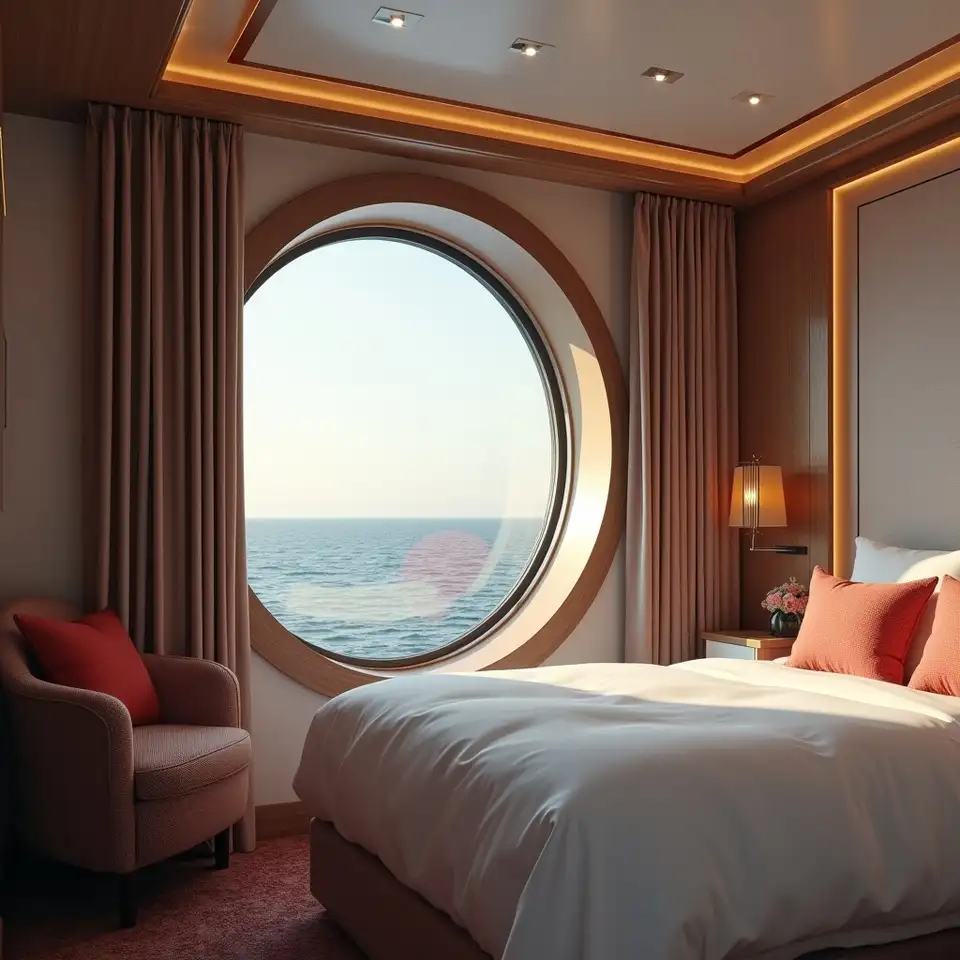
comfortable cruise ship cabin with ocean view

Cabin selection affects more than your sleeping arrangements. It influences how much natural light you wake up to, how much motion you feel in rough seas, how far you walk to reach the pool deck or the main dining room, and — on longer voyages especially — how much space you have to decompress at the end of a full day in port. Most cruise lines organise their cabins into four broad categories: interior, ocean view, balcony, and suite. Within each category, deck position, proximity to elevators, and specific cabin dimensions can vary considerably. A balcony cabin on a lower deck near the bow will feel quite different from one on a higher deck amidships, even if both carry the same grade designation and fare.

Interior cabins are the most affordable option and suit travellers who spend little time in their cabin outside of sleeping hours. They offer no natural light, which some travellers find disorienting but others genuinely appreciate for the quality of sleep it encourages. Ocean view cabins introduce a window or porthole, adding a sense of connection to the outside world without the premium of a private outdoor space. These suit travellers who want natural light but are not planning to spend significant time on a private balcony. The price difference between interior and ocean view can be surprisingly modest on certain itineraries, making the upgrade worth considering during the planning conversation.

Balcony cabins have become the default preference for many experienced cruisers, particularly on longer sailings where the private outdoor space becomes genuinely useful rather than merely attractive. Suites vary enormously by cruise line — on some ships they represent a modest upgrade in space and service; on others they constitute an entirely separate onboard experience with dedicated dining, butler service, and priority embarkation. Understanding what a suite actually delivers on your specific ship matters considerably before treating the price premium as self-evidently worthwhile. We review these distinctions with you as part of the cabin selection stage in our voyage consultation.

Cruise Dining

Food is one of the most frequently discussed aspects of cruise travel, and with good reason. A ship at sea for several days becomes its own culinary environment, and the quality and variety of what is available on board shapes the rhythm of each day in a way that is difficult to separate from the overall experience. Most cruise lines operate a main dining room with a rotating menu, a buffet venue for casual meals, and a selection of specialty restaurants that carry an additional charge. The balance between these options — and the quality of each — varies considerably across cruise lines and even across ships within the same fleet. Understanding where a particular cruise line invests in its food and beverage programme is part of the assessment we carry out when comparing options for you. For Malaysian travellers, dietary preferences and the availability of familiar flavours at sea are often a practical concern. Most major cruise lines offer halal-friendly options, and some have made more deliberate investments in Asian cuisine across their buffet and specialty dining venues. However, the consistency and quality of these offerings varies, and it is worth discussing your specific dietary preferences during the consultation rather than assuming they will be accommodated seamlessly. Beverage packages represent another area where clarity matters before you board. Most cruise lines offer pre-purchased packages covering alcoholic and non-alcoholic drinks, and whether these represent value for your travel style depends entirely on your consumption habits. We help you assess whether a package makes financial sense for your specific itinerary length and personal preferences, rather than defaulting to a recommendation that benefits the cruise line more than it benefits you.

Cruise Essentials

Travel Documentation

Malaysian passport holders need to verify visa requirements for every port of call on their itinerary, not just the embarkation and disembarkation points. Some cruise lines include visa assistance as part of their service; others leave the responsibility entirely with the passenger. Checking these requirements early — particularly for itineraries that pass through multiple countries — avoids complications that can disrupt the boarding process or limit your access in port.

Travel Insurance for Cruises

Standard travel insurance policies are not always designed with cruise travel in mind. Medical evacuation at sea, missed port coverage, and the cost implications of a delayed embarkation are scenarios that a cruise-specific policy addresses more comprehensively. Reviewing your existing coverage against these scenarios before departure is a practical step that is easy to overlook when the focus is on the more enjoyable aspects of planning.


travel documents and packed luggage
passenger using onboard cashless system

Packing for a Cruise Voyage

Packing for a cruise requires balancing the formality requirements of evening dining with the practical needs of port days — and doing so within cabin storage that is more limited than most hotel rooms. Some cruise lines enforce formal dress codes on certain evenings; others have moved to smart casual as the standard. Knowing what is expected on your specific ship before you pack avoids both over-preparation and the mild embarrassment of being underdressed at dinner.

Managing Onboard Spending

Most modern cruise ships operate on a cashless system where all onboard purchases are charged to a linked account settled at the end of the voyage. This is convenient but can obscure how quickly discretionary spending accumulates across specialty dining, shore excursions, spa services, and beverages. Setting a rough daily budget for onboard extras before you sail — and reviewing your account balance mid-voyage — keeps the final bill from arriving as a surprise.

Cookie Notice

We use cookies to improve your browsing experience and help us understand how visitors engage with our cruise travel content.